Table Manners: Five Orchid Centrepieces for a Considered Christmas
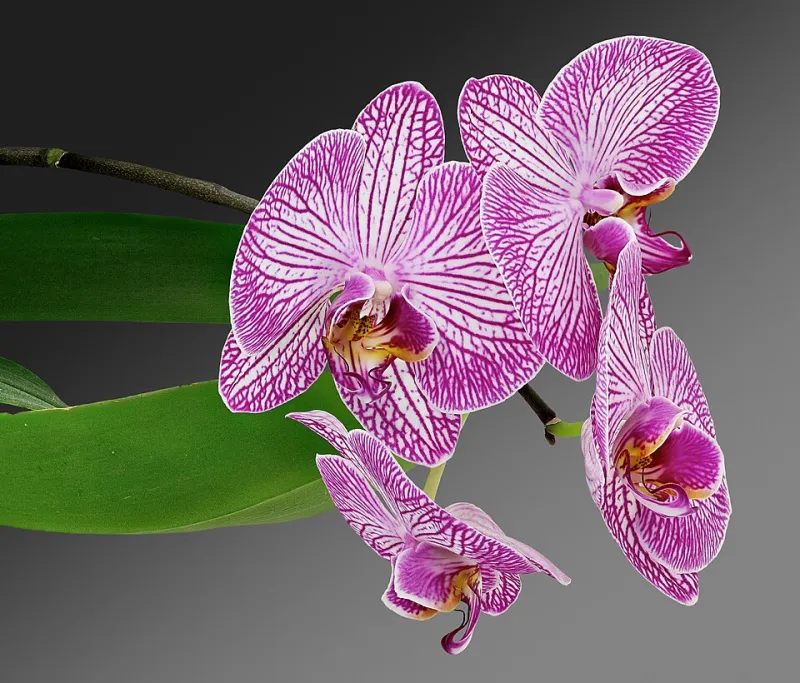
Photo: Shixart1985, CC BY 2.0, via Wikimedia Commons
The Christmas table is where good intentions and bad decisions tend to meet. Somewhere between the crackers and the cranberry sauce, decoration becomes excess, and by pudding the centrepiece has usually been pushed aside to make room for the port. Orchids offer a way out. Architectural, long-lasting and entirely free of glitter, they bring a note of composure to a room that is otherwise doing a great deal. What follows are five approaches, each built around a different orchid and a different mood, all of them designed for a British dining room rather than a hotel lobby.
1. Ivory and moss: the quiet beginning
The most restrained of the five, and often the most effective. Take three white phalaenopsis, ideally of differing heights, and group them in low matte ceramic pots along the centre of the table, interspersed with cushions of preserved sheet moss and a scatter of small ivy leaves. Nothing else. The white flowers read as candlelight at a distance, and the moss gives the whole arrangement a softness that cut flowers cannot match.
Keep the group to a third of the table's length and leave generous space at either end for glassware. A linen runner in oatmeal, plain white china and unstarched napkins complete the picture. This is the scheme to choose if the room is small, the light is low, or the guest list includes someone who will notice.
2. Burgundy and evergreen: the richer register
For a more traditional table, use dark cymbidium sprays, whose deep plum and near-black flowers sit beautifully against British evergreens. Lay a narrow band of magnolia leaves, spruce tips and a few stems of berried ivy directly on the cloth, then place two or three cymbidium stems in low glass vases at intervals along the runner, cut short so that sightlines remain open. Brass candlesticks, beeswax tapers and a dark green or oxblood tablecloth finish the scheme.
Cymbidium sprays are the most practical orchid for cutting, holding their shape in water for a fortnight or more. Buy them two or three days before the meal, not on Christmas Eve.
3. Candlelit glass: the modern arrangement
For a contemporary dining room, or a table that must double as a serving surface, consider phalaenopsis in clear glass. A single tall cylinder holding one plant, its roots visible through the glass and dressed with a little moss at the surface, is a striking object in its own right. Cluster three of varying heights in the centre, then surround them with a scattering of simple glass votives.
The trick here is restraint in the planting medium: use a coarse bark mix rather than green moss throughout, so the roots read as an architectural detail rather than a tangle. Keep the glass spotless, and top up with a little water only when the roots turn silver.
4. Winter woodland: bark, lichen and softness
If the house is old, timbered, or simply fond of texture, this is the scheme that suits. Use a shallow wooden trough or a lined basket filled with bark chips, moss and a few small birch logs, and set into it two or three paphiopedilum or compact dendrobium plants. Their strange, hooded flowers have an almost medieval quality that sits perfectly beside pewter, dark wood and low light.
Add a handful of dried hydrangea heads for volume, and keep the whole construction low enough that guests can see over it. This is the most forgiving of the five arrangements, and the one most likely to be admired for the whole of December rather than a single evening.
5. The single stem: the minimalist gesture
For the very small table, or the host who distrusts centrepieces altogether, place one perfect stem in a slender glass vase at the centre, flanked by two simple candlesticks. A single white phalaenopsis stem, gently curved and staked with green wire, holds an entire table together with almost no visual weight. Repeat the gesture on a sideboard if the room needs balance.
This approach works best with a plain cloth, unpatterned china and a slightly generous candle. It is also the easiest to clear away when the plates arrive, which is a virtue that should not be underestimated on Christmas Day.
Keeping stems and plants happy through the festivities
Cut orchid stems are not cut-and-forget flowers. Recut the ends at an angle when they arrive, use lukewarm water, and change it every second day. Keep arrangements away from radiators, open fires and draughts, and move them out of the room overnight if the heating is turned up high. A drop of household bleach in the vase water, no more than a quarter of a teaspoon per litre, will keep stems clean without harming them.
Potted plants used as centrepieces need slightly different handling. Keep them out of the way of roasting trays and wine spills, and never place them near a fruit bowl: ripening fruit releases ethylene, which shortens flower life dramatically. Water sparingly while they are on the table, and return them to a bright, draught-free windowsill once the guests have gone. A phalaenopsis that has done Christmas service will often flower again the following winter if it is allowed to rest properly in January.
Finally, resist the urge to press orchids into a florist's foam. Their stems are hollow and resent being wedged; water tubes, glass vases and shallow dishes are kinder and look considerably better in any case.
A grown-up alternative
The supermarket bouquet will always have its place, particularly on the twenty-seventh when everyone is eating leftovers. But for the meal itself, there is something quietly confident about a table dressed with orchids: no scent wars, no fallen petals, no glitter to hoover from the rug in January. Just flowers, candlelight and a room that has been considered rather than decorated.