Low Light, High Glow: A Windowsill Ritual for Orchids in the British Winter
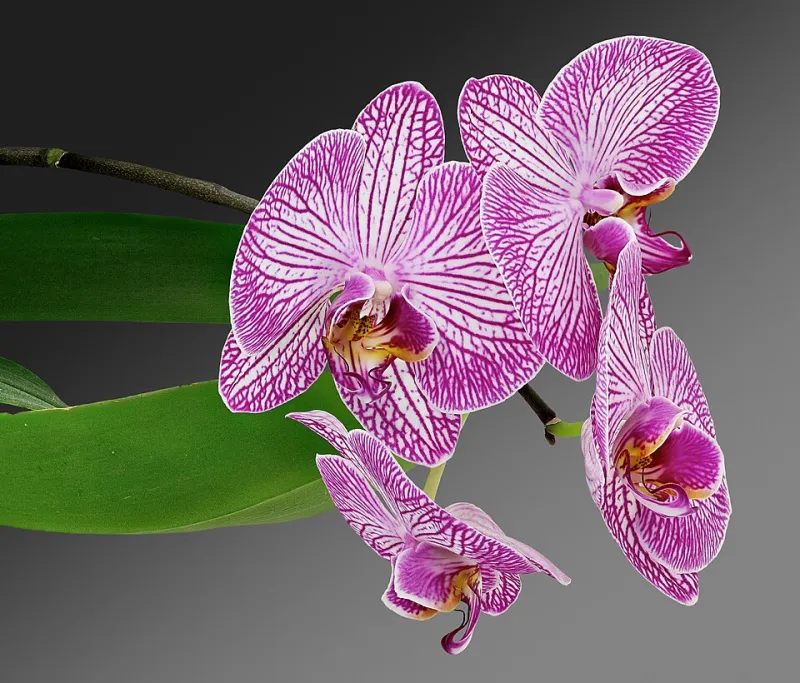
Photo: Mister rf, CC BY-SA 4.0, via Wikimedia Commons
There is a particular hour in a British November, somewhere between three and four in the afternoon, when the sky turns the colour of weak tea and every lamp in the house suddenly seems essential. On the windowsill, the orchids notice. Days shorten, light levels fall away, and the central heating begins to pull moisture from the air with quiet efficiency. What follows is not a crisis, but it is a change of terms, and the plants that flourish through winter are the ones whose owners have read those terms carefully.
Why the British winter asks more of us
Orchids are not fragile, but they are specific. Most of the epiphytes we grow indoors come from the warm, humid, brightly lit forest canopies of the tropics, where daylight is measured in twelve-hour stretches and humidity rarely dips below sixty per cent. A Yorkshire sitting room in January offers perhaps six or seven usable hours of grey light and relative humidity closer to thirty-five. That gap is what winter care is really about: closing it, gently, without turning the corner of a room into a laboratory.
The good news is that orchids respond to small adjustments with considerable grace. A shift of thirty centimetres along a sill, a timer set for twelve hours, a tray of wet pebbles: these modest interventions are usually enough. The aim is not perfection. It is a state of steady comfort, maintained with the kind of regularity that suits a dark season.
The compass on your sill
The single most useful thing you can do this month is reconsider where each plant sits. In a British winter the sun is low and weak, so rooms that would scorch in June become unexpectedly generous.
A south-facing sill, even behind glass, is the brightest real estate you have, and phalaenopsis, cymbidium and most oncidium types will thank you for a place in the front row. Do keep foliage from pressing against the pane on frosty nights, when the glass itself becomes cold enough to damage tissue. East-facing windows offer soft morning light that suits paphiopedilum, miltoniopsis and other orchids inclined to sulk under glare. West-facing sills are excellent for phalaenopsis through the afternoon, though a low winter sun can still warm a small room quickly, so watch the thermometer rather than the calendar. North-facing windows are, frankly, hard work, and are best reserved for resting plants or supplemented with a lamp.
A word on architecture. Period homes with sash windows and original shutters offer cool, bright bays that many orchids adore, but the same windows can whistle with draughts in February. Modern flats, sealed and warm, present the opposite problem: beautifully even temperatures and air so dry it makes leaves curl. Neither house is better. Each simply asks a different question.
One habit worth adopting: draw curtains and close shutters at dusk, and on the coldest nights move plants a hand span back from the glass. It takes ten seconds and prevents a good deal of cold scorch.
Supplementary light without the laboratory look
If your sill receives fewer than eight hours of reasonable daylight, a small LED grow bar will transform results. Choose a full-spectrum or daylight-white unit in the 4000 to 6500 Kelvin range, mount it roughly thirty centimetres above the leaves, and run it for twelve hours on a plug-in timer. The effect on new growth, particularly in phalaenopsis and paphiopedilum, is visible within weeks.
Happily, the current generation of lights is slim, matte and discreet enough to sit beneath a shelf or behind a pelmet without announcing itself. Choose one with a braided cable rather than a plastic flex, clip the timer out of sight, and the whole arrangement reads as considered rather than clinical. A warm-white lamp beside a cool-white grow bar also helps the corner feel like a room rather than a propagation bench.
Humidity, handled quietly
Central heating is the great desiccator of the British winter. Pebble trays remain the simplest remedy: a shallow saucer filled with washed gravel and water, with the pot resting above the waterline so roots never sit in liquid. Grouping plants closely creates a small pocket of shared moisture, and a wide ceramic vessel of water placed near a radiator will quietly release vapour as it warms.
For larger collections, a small ultrasonic humidifier run for an hour in the morning and an hour in the evening will hold a room at fifty to sixty per cent. Aim the mist away from flowers, which mark easily, and never mist blooms directly in an attempt to compensate. A simple hygrometer, ideally an analogue brass one, tells you far more than guesswork.
In period homes, check for the opposite problem: cold, still air in bay windows can encourage mould on leaves and buds. A little air movement, achieved by opening a door to an adjacent room, is usually sufficient.
The cool-rest club
Not every orchid wants warmth in winter. Cymbidium, Dendrobium nobile, odontoglossum, masdevallia and miltoniopsis all benefit from a genuine cool season, with night temperatures between ten and thirteen degrees, reduced watering and no feeding until spring. This rest period is what prompts flowering rather than foliage. A cool spare bedroom, a glazed porch or an unheated conservatory corner suits them well; a warm sitting room does not.
Phalaenopsis, by contrast, prefers a steady eighteen to twenty-one degrees and will happily continue in the living room. Paphiopedilum sits comfortably in between, tolerant of average warmth but grateful for cooler nights.
Watering through the grey months
Growth slows, compost dries more slowly, and the temptation to water on habit becomes the most common winter error. Check the root zone before reaching for the can, and water in the morning so that any excess has drained before evening. Use tepid water, let it run through the pot, and never allow a plant to stand in a decorative cachepot with water in the base.
A ritual, not a checklist
Winter orchid care is at its best when it feels like a small daily pleasure rather than an obligation. A brass tray on the sill, three pots arranged by height, a single stem staked with discreet green wire: these are the details that make a grey afternoon feel tended rather than endured. The light will return. Until it does, a little attention, given calmly and often, is all these plants ask.