The Hallway Orchid: Why the Passage Between Rooms Deserves a Single Stem
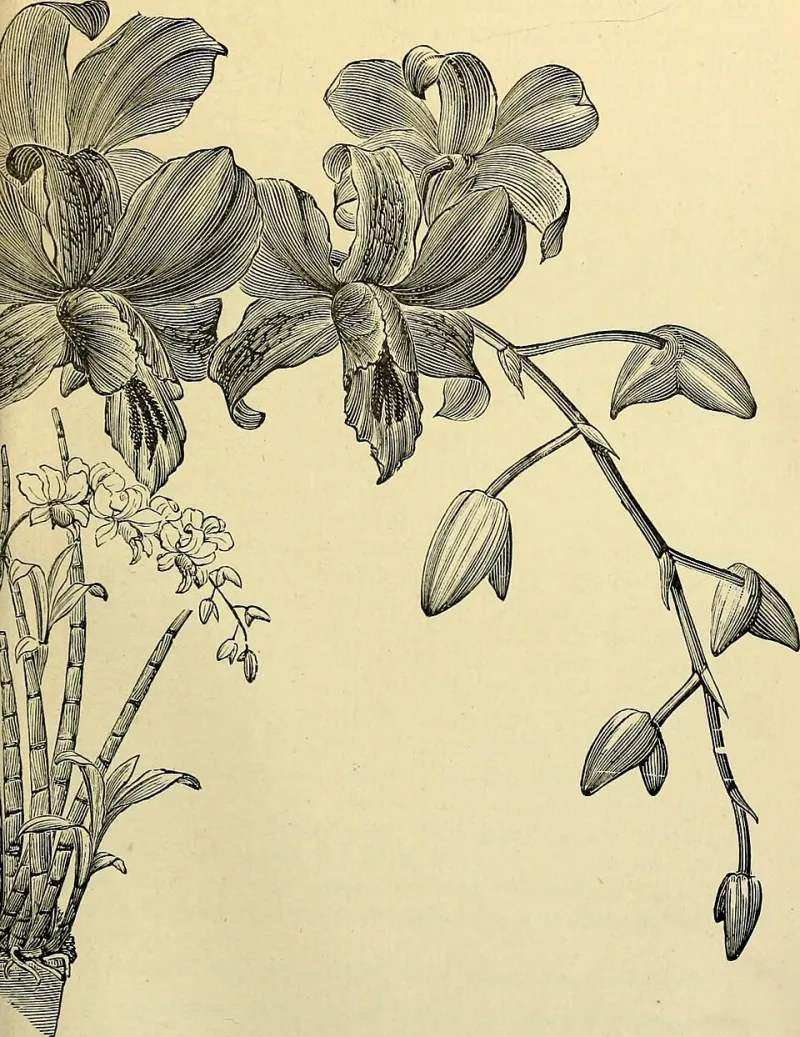
Photo: Internet Archive Book Images, No restrictions, via Wikimedia Commons
The hallway is rarely treated as a room in its own right. It is a passage, a place of coat hooks and post, of shoes lined up with good intentions and a mirror that catches the last glance before the door closes. Yet it is also the first and last impression of a home, and it has qualities that many orchids quietly appreciate: cooler air, filtered light and a certain amount of benign neglect.
This is an argument for restraint. Not a bank of plants, not a florist’s display, but a single stem in a considered vessel. The hallway does not need to become a conservatory. It needs one living thing that asks for little and gives the space a point of stillness.
The case for the passage
Most British hallways are not warm. They sit between the front door and the rest of the house, and they often carry a draught that the sitting room does not. That coolness is a disadvantage for tropical plants that want steady heat, but it suits certain orchids that prefer a marked drop in temperature at night. The light is usually indirect—filtered through a glazed door, a fanlight or a narrow window—which is closer to the dappled shade of a forest floor than the glare of a south-facing sill.
The hallway also imposes a useful discipline. Because it is a space we pass through rather than inhabit, we are less tempted to fuss. We water less often, move the plant less often and inspect it less anxiously. For orchids that resent overattention, that is no small advantage.
Light, air and the limits of the hallway
None of this is a licence to place an orchid in a dark corridor. A hallway with no natural light will not sustain a flowering plant. The ideal is a spot near a glazed door or window, out of direct sun and away from the front door’s cold blast. A north-facing hall can work for lower-light orchids if the light is bright enough to read by during the day. An east-facing hall, with gentle morning sun, is often kinder.
Avoid the immediate vicinity of radiators, and do not place a plant where it will be caught by the opening and closing of the front door in winter. Cold draughts can mark leaves and stall growth. A hallway that is merely cool is different from one that is icy and turbulent.
Which orchids suit a hallway?
Phalaenopsis is the supermarket default, but it is not the natural choice for a cool passage. It prefers warmer, more stable conditions and may sulk in a chilly hall. Better candidates include Paphiopedilum, the slipper orchids, which tolerate lower light and cooler conditions, and some Masdevallia species, which enjoy cool air and high humidity but demand more careful watering. A compact Dendrobium may also work in a bright, cool hall, though it will need a drier winter rest.
For a first attempt, a Paphiopedilum in bud or flower is the more forgiving choice. Its foliage is handsome even when the flower fades, and its preference for filtered light suits the hallway’s limitations. If the hall is warm and bright, a small Phalaenopsis can still succeed, but it should not be placed in a cold draught.
Stoneware, silvered glass and the single stem
The vessel matters as much as the plant. A single stem in a simple stoneware vase has weight and quietness; it suggests that the hallway is cared for without being staged. Silvered glass, with its faint mirroring, catches the low light of autumn and winter and makes a single flower feel more deliberate. Both materials suit the British preference for understatement.
Keep the arrangement low and narrow. A hallway is a thoroughfare, and a wide bouquet will be knocked. One stem, cut at an angle and placed in fresh water, can last a week or more. If the orchid is growing in a pot, choose a cachepot that hides the plastic and sits securely on a narrow console. A saucer is essential; water marks on wood are not part of the aesthetic.
A practical note on upkeep
A hallway orchid should be checked less often than one in a living room, but not ignored. Water in the morning, so that any splashes dry before the house cools at night. Keep the compost just moist, never sodden. In winter, reduce watering further. If the hallway is very dry, group the orchid with a small bowl of water or a pebble tray, but do not mist the flowers.
Finally, resist the urge to fill the space. One stem, one vessel and one clear surface will do more for a hallway than a crowded shelf of plants. The point is not abundance. It is the small, civil pleasure of passing something beautiful on the way in or out.