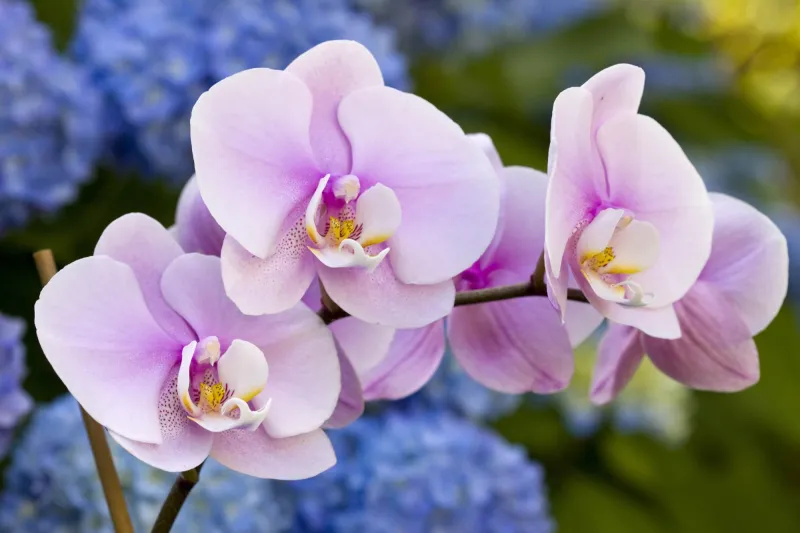
The Quiet Interval: Caring for an Orchid After Its Final Bloom
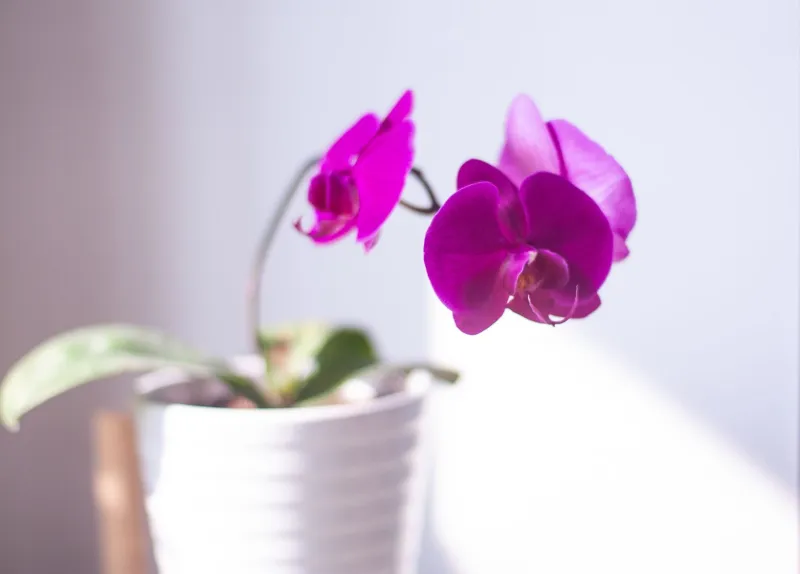
The final bloom is rarely dramatic. One morning the last flower is papery at the edges; by evening it has dropped, and the plant that held the room’s attention for weeks is suddenly a set of leaves and roots on a windowsill. For many growers this is the moment when confidence falters. The display is over, but the orchid is not asking to be abandoned or over-managed. It is asking for a quieter form of attention.
Read the plant before reaching for the scissors
Post-flowering care begins with observation rather than action. Look at the spike, the leaves and the roots together. A green, firm spike on a healthy Phalaenopsis may still have energy to give; a brown, hollow or shrivelled spike has finished its work. The common windowsill orchid is not a plant that rewards haste, and the temptation to cut everything back on the day the last petal falls is worth resisting.
If the spike remains green and the plant looks strong, the grower has a choice. Cutting just above a node — roughly one to two centimetres above the second or third node from the base — can encourage a side spike on some Phalaenopsis. Cutting lower, closer to the leaves, asks the plant to concentrate on roots and foliage instead. Neither approach is a failure. The first may produce a smaller follow-up flowering; the second may produce a stronger plant in time. For a brown or dying spike, cut near the base with a clean blade.
The cut itself: clean, shallow, certain
Use a sharp blade or pair of scissors that has been wiped with surgical spirit or a similar sterilising agent. Make one clean cut rather than sawing at the stem, and keep the wound dry for a day or two. There is no need to seal the cut or dress it with anything elaborate. Good hygiene is the main requirement; the rest is simply restraint.
Watering after the display
The weeks after flowering are not a period of drought. They are a period of adjustment. In a British home in late autumn or winter, light is lower and central heating can dry the air, but the orchid’s need for water may still be modest. The aim is steady moisture, not a strict schedule.
Check the pot before watering. Lift it: a dry pot feels lighter. Look at visible roots through a clear inner pot, if there is one; silver-green roots suggest dryness, while green roots suggest recent watering. Water in the morning where possible, let the water run through the pot, and allow it to drain completely. Standing water is the enemy of roots, particularly in the cooler months when evaporation is slow.
If the home has hard water, rainwater or filtered water remains a sensible choice for orchids, though the occasional use of tap water is unlikely to be fatal. The important habit is to avoid letting the growing medium stay sodden. A slightly reduced frequency is usually enough after flowering; a dramatic reduction is not.
Feeding: a lighter hand
Bloom-boosting feeds have done their work. Once the flowers are gone, the plant’s needs shift towards maintenance and, in many cases, new root and leaf growth. A balanced orchid feed at weak strength, applied every second or third watering during active growth, is generally sufficient. During a deliberate resting period, feeding can be reduced further or paused.
Never feed a dry root system. Water first, then feed, so that the roots are not exposed to concentrated salts. And do not attempt to compensate for lost flowers with extra fertiliser. More feed is not the same as more care.
The resting period
Rest is not the same as neglect, and for Phalaenopsis it is not a true dormancy. It is a change of pace. For roughly four to six weeks after flowering, many growers reduce feeding, keep watering modest and allow the plant to sit in a bright, stable position without being pushed towards another display. Orchids with pseudobulbs may have more defined seasonal rests, and those should be respected according to the species.
A resting orchid is still a living plant. It should not be moved to a dark corner or left bone dry. The resting period is simply a pause in the cycle of forcing and flowering, a chance for the plant to consolidate.
Room conditions in the British home
British winters bring short days and warm, dry rooms. Move the orchid to the brightest position available without direct summer sun, but keep it away from cold glass at night and from the direct blast of a radiator. A gentle drop in night temperature — a few degrees cooler than the day — is useful for many orchids and can be achieved in a spare room or by drawing a curtain between plant and window at night. Avoid dramatic swings.
Humidity matters, but misting the plant indiscriminately is rarely the answer. Grouping orchids together, or standing pots on a tray of damp pebbles with the pot above the water line, can raise local humidity without wetting leaves. Good air movement remains important, especially in a sealed winter room.
Encouraging a future rebloom
A new spike is a response to conditions, not a reward for anxiety. The essentials are a mature plant, adequate light, healthy roots and a period of stable care. For Phalaenopsis, a gentle night-time temperature difference of around three to five degrees Celsius over several autumn weeks can help initiate a spike, but it should not be forced in a draughty or overheated room. Patience is part of the method.
After the resting period, resume weak feeding and watch for new roots or leaves. If the growing medium has broken down, repot after flowering rather than during the display, using a bark mix suited to the plant and a pot that allows drainage. Support a new spike when it appears, but resist tying it tightly; the stem should be guided, not constricted.
The interval as part of the display
The weeks after the last petal are not an empty interval between shows. They are the part of orchid growing that makes the next flowering possible. A clean cut, a lighter hand with water and feed, a bright resting place and a little patience will carry most orchids through the quiet season with composure. The display has ended; the cultivation has not.