The Renter’s Canopy: Suspending Orchids Without Holes or Clutter
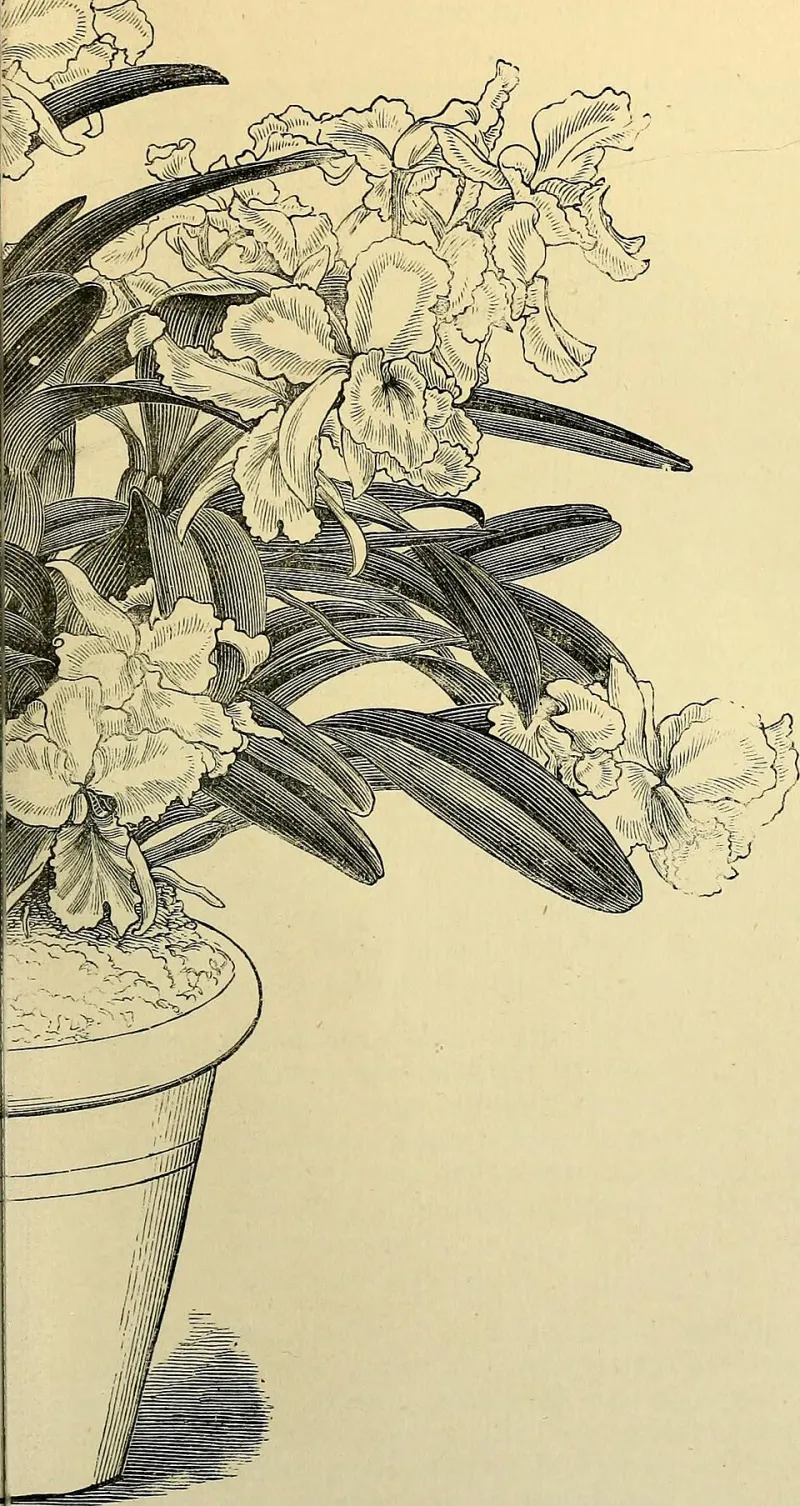
Photo: Internet Archive Book Images, No restrictions, via Wikimedia Commons
A small rental rarely offers the luxury of a dedicated plant room. The windowsill fills, the shelf beside the sofa becomes crowded, and every new orchid seems to arrive with a demand for space that the tenancy agreement did not anticipate. The answer is not another row of pots on the floor. It is to look upward, where the air is often brighter and the architecture is already waiting.
Suspended orchids can be beautiful in a rented home, but they require a more careful approach than simply fixing a hook and hoping. The aim is a canopy that feels calm and deliberate: a few well-chosen plants held securely above eye level, contributing vertical rhythm without turning a modest room into a cluttered conservatory.
Begin With the Tenancy, Not the Toolbox
Before considering any fixing, read the tenancy agreement and, where necessary, ask the landlord or letting agent for permission in writing. Many standard assured shorthold tenancies in England restrict alterations to the fabric of the property, and even adhesive products can remove paint or leave residue. A no-drill system is not automatically a no-damage system. It is merely a system that avoids a drill.
In a rental, the safest approach is to use existing fixing points, freestanding frames, over-door hooks or tension rods that can be removed without trace. If a ceiling hook is already present, inspect it for movement and rust before trusting it with a living plant. If no hook exists, do not assume that a adhesive ceiling pad will hold a watered orchid. Adhesives are weakened by warmth, humidity and the gentle swing of a hanging basket.
What a Hanging Orchid Actually Weighs
Weight is where romantic ideas about suspended planting meet arithmetic. A small plastic pot in bark may weigh less than a kilogram when dry, but after watering it can approach one and a half kilograms. A wire basket with a coir liner, sphagnum moss and a mounted orchid can easily reach two or three kilograms. Add the hook, the chain and the occasional movement of air, and the load is greater than the static figure suggests.
This matters because no-drill hardware is often rated for modest loads. A tension rod sold for curtains may hold a light net curtain but not a wet basket. An adhesive hook rated at one kilogram is not suitable for an orchid. Look for stated load ratings and reduce them by at least half for safety, particularly in bathrooms and kitchens where humidity fluctuates. When in doubt, choose a freestanding frame that transfers weight to the floor.
Light and Humidity Above Eye Level
Height changes the growing conditions. The upper part of a window often receives more light, which suits compact epiphytes that would otherwise become drawn and shy to flower. But warm air rises, and in a heated British flat the layer near the ceiling can be significantly drier than the air at table height. In winter, when central heating is running, a suspended orchid may dry faster than the same plant on a sill.
Hang plants slightly below the top of the window rather than pressed against the ceiling. Avoid placing them directly above a radiator, and keep them clear of blinds and curtains that can trap heat. Grouping two or three baskets can create a small pocket of humidity, but do not crowd them so closely that air cannot move. A room humidifier, or a pebble tray placed well below the hanging plant, is more effective than misting overhead near electrical fittings.
Compact Epiphytes for a Suspended Sill
Not every orchid belongs in the air. Choose compact epiphytes with a naturally small footprint and a tolerance for drying between waterings. Miniature Phalaenopsis are widely available and manageable, though they prefer steady warmth. Oncidium Twinkle forms a neat, fragrant cloud and adapts well to a bright room. Brassavola nodosa is elegant and forgiving, with slender leaves and evening scent. Leptotes bicolor is small, floriferous and appreciates a bright, airy position. Dendrobium kingianum is tougher and can be grown in a small basket, provided it receives a cooler, drier winter rest.
Specialist British nurseries can advise on which plants are best suited to hanging culture. Avoid large, top-heavy orchids and those with long, arching stems that will be damaged by passing heads and doors. The object is not to recreate a tropical canopy in a bedsit, but to select a few species that look well at height and remain practical to water.
Systems That Hold Without Leaving Marks
A tension rod across a window recess can support a light basket if the surfaces are sound and the rod is rated for the load. Check the paint and plaster first; pressure can mark soft walls. A floor-to-ceiling spring pole can carry a small hanging arrangement without drilling, but it must be installed according to the manufacturer’s instructions and kept away from damp ceilings. Over-door hooks are useful in a hallway or spare room, though they are best reserved for very light plants or air plants.
For a more architectural solution, consider a freestanding ladder or a slim metal frame placed beside a window. It occupies little floor space, can be moved when the room is cleaned, and leaves no fixing marks at the end of a tenancy. Whatever system is chosen, use a secondary restraint such as a closed hook or a cable tie to prevent the basket from being lifted off accidentally.
Styling a Canopy That Feels Architectural
A suspended display should read as a considered arrangement rather than a collection in transit. Limit the palette: clear glass, black wire, aged brass or natural cork, repeated with consistency. Hang in odd numbers, but not too many. Three baskets at different heights can create a quiet vertical rhythm; ten will create visual noise.
Think about sightlines. In a living room, hang orchids above head height so that they frame the window rather than obstruct the view. In a hallway, a single suspended stem can draw the eye upward and make a narrow passage feel taller. Keep the trailing roots and leaves tidy, and remove spent flowers promptly. The most elegant suspended orchids are those that appear effortless, which is another way of saying that the supporting hardware has been chosen with care.
For renters in 2026, the suspended sill is not a compromise. It is a way of gardening within limits, using height, light and restraint to make a small home feel more generous. The canopy need not be large. It need only be secure, well planted and quietly beautiful.