Silver Fingers, Green Points: Reading an Orchid’s Air Roots
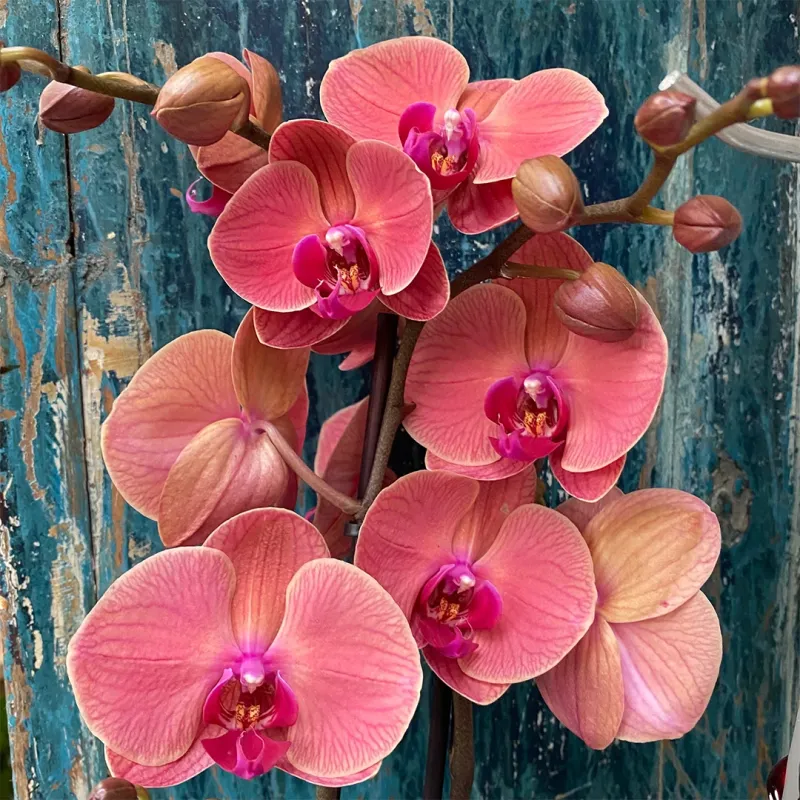
Photo: Phalaenopsis orchid aerial roots silver green tips on windowsill in British home, via www.bomagardencentre.co.uk
On a November windowsill, when the garden beyond the glass has gone quiet, an orchid’s aerial roots become unusually legible. They arch over the rim of the pot like pale fingers, sometimes silvered, sometimes tipped with green, and they invite a kind of anxious attention. Should they be misted? Buried? Cut back? Hid behind a cachepot? The answer is rarely dramatic. Aerial roots are not a flaw in the display; they are part of it, and they are among the clearest signals an indoor orchid gives about water, air and the balance between the two.
For growers who care as much about the look of a windowsill as the health of the plant, learning to read these roots is a design skill as well as a horticultural one. They tell a story about the room, the season and the routine. The task is to observe without interfering too quickly.
What the Air Roots Are Doing
In the wild, many orchids — particularly epiphytes such as Phalaenopsis, Cattleya and Oncidium — live above the forest floor, clasping bark and stone rather than sinking into soil. Their aerial roots are not decorative extras. They anchor the plant, absorb moisture from humid air and rainfall, and help it breathe. The spongy outer layer, the velamen, is the key. When dry, it looks silver-grey or chalky; when wet, it becomes greener and more translucent. This tissue takes up water quickly and also protects the living root beneath.
In a British home, the air is often drier than the orchid would prefer, especially once central heating is running. That does not mean every silver root is desperate. It means the plant is using the equipment it evolved to use. Aerial roots above the compost are normal, particularly in epiphytic orchids, and their presence is not evidence that the plant is unhappy. They are simply doing what roots do when they meet air rather than bark.
Silver, Green and the Question of Water
The colour of an aerial root is a useful guide, but it must be read alongside the compost, the pot weight and the plant’s leaves. A dry root with a silver sheath is not automatically thirsty. A green tip, however, usually indicates active growth: the root is extending and the growing point is alive. That soft green point is one of the most encouraging sights on a winter windowsill. It suggests the orchid is still investing in new tissue, even as daylight shortens.
When watering, it is helpful to notice how the aerial roots respond. After a thorough soak and drain, the velamen may darken and plump slightly. If the roots remain papery and silver for days while the compost is also dry, the plant may be under-watered. If they stay persistently green and the compost is sour or wet, the problem is more likely to be excess moisture at the root zone. The aerial roots are a prompt for closer inspection, not a verdict on their own.
Ridges, Shrivels and the Signs of Strain
A healthy aerial root is firm, smooth and rounded. Fine ridges can appear as it dries, rather like the creases on a leaf that has lost a little turgor. Mild ridging is often simply the velamen contracting. Deep longitudinal wrinkles, however, together with leathery leaves and a light pot, suggest the plant has been dry for too long. Conversely, roots that look mushy, blackened or hollow are a sign of collapse, usually from prolonged wetness and poor air movement.
The distinction matters because the remedies are opposite. A shrivelled root asks for a more reliable watering rhythm; a rotting one asks for less water, better drainage and a cooler, airier position. In either case, the aerial root is best left attached unless it is clearly dead and papery. Cutting living roots to tidy the outline is rarely kind to the plant.
The Temptation to Mist
Misting is the most common response to silver roots, and it is easy to see why. A fine spray makes the velamen green for a few minutes and gives the grower a sense of action. But in a heated British sitting room, misting offers only brief relief and can create other problems if water sits in leaf joints or on the crown. It is not a substitute for proper watering, and it can encourage mould on leaves in still air.
A better approach is to improve the immediate environment. Grouping orchids loosely, standing them on a pebble tray, or placing them in a bathroom or kitchen where humidity is naturally higher can do more than a daily spray. If misting is used at all, it should be occasional, light and timed for the morning, so that surfaces dry before evening. The aim is not to keep the roots permanently green but to support a plant that is already being watered sensibly.
The Temptation to Bury
Aerial roots that stray over the pot rim can look untidy, and the urge to tuck them into compost is understandable. Resist it. These roots are adapted to air, and burying them in a moist, compacted medium can cause them to rot. If a root is long and awkward, guide it gently around the outside of the pot or allow it to follow its natural curve. In a decorative setting, choose a cachepot with enough clearance so that roots are not crushed against the inner wall.
This is where cultivation and styling meet. A clear-glass inner pot, a woven basket or a simple ceramic vessel can all accommodate aerial roots if they are chosen with a little forethought. The point is not to disguise the plant’s character but to frame it. A root that arcs over a dark pot rim can be a sculptural detail, provided it is not jammed behind a tight-fitting sleeve.
A Windowsill That Reads Well
For a refined indoor display, restraint is usually the more elegant choice. Let the roots show. Keep the pot sitting slightly proud of its cachepot so that air can move. Avoid crowding the sill with too many objects; a single orchid with visible roots has more presence than three plants crammed against the glass. In winter, move the plant closer to the light but keep it clear of cold draughts and radiators. Turn it occasionally so that growth remains balanced.
A pale root against a dark pot, a green tip catching the morning light, a silver sheath against stone or timber: these are small visual pleasures. They are also honest. The orchid is not asking to be corrected; it is asking to be understood.
When to Leave Well Alone
The most useful rule is to intervene only when there is a clear reason. Firm silver roots: leave them. Green tips: welcome them. A few dry ridges: monitor the watering. Soft or blackened roots: investigate the compost and drainage. Above all, do not treat every aerial root as a symptom. In a British home in late autumn, with the heating on and the light low, an orchid may look a little more exposed than it did in summer. That is the season, not necessarily a crisis.
Read the roots, adjust the routine gently, and let the windowsill keep its quiet character. The aerial root is not an intrusion into the display. It is the display’s most articulate feature.