A Softer Light: Shading the Southern Sill Without Closing the Room

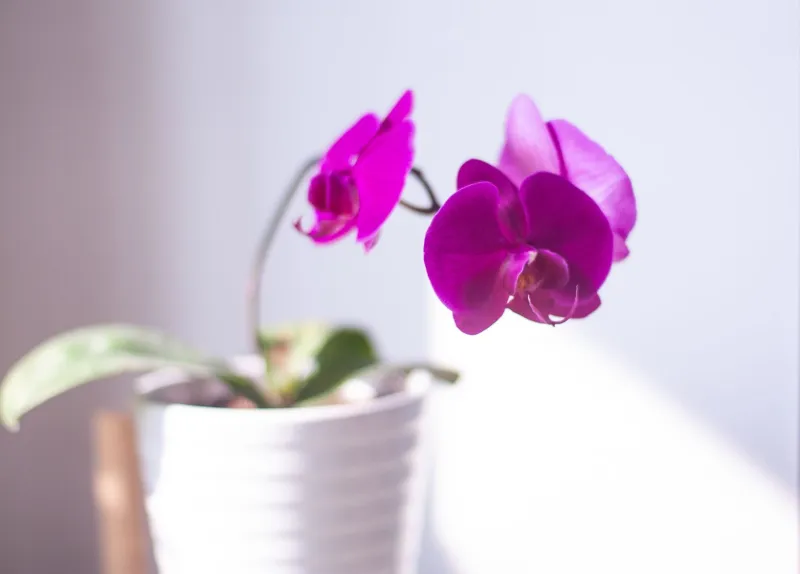
Photo: Posh Living, LLC, CC BY-SA 2.0, via Wikimedia Commons
The British south-facing sill is a generous but demanding position. In winter it offers the low, clean light that keeps orchids steady; in July it can turn a pane of glass into a magnifying lens. The usual response — a heavy curtain pulled across at noon — protects the leaves but leaves the room feeling shuttered. The better answer is a layered one: to temper the brightest hours while allowing the room, and the view, to remain open.
Read the light before choosing the cloth
Begin with observation, not shopping. On a clear day in late spring or early summer, place a white card at leaf height on the sill and take readings with a simple smartphone light-meter app at nine in the morning, noon and three in the afternoon. Note the peak rather than the average. Then use the shadow test: a hand held over the leaves should cast a crisp, hard-edged shadow in strong direct sun, a soft-edged shadow in diffused light, and almost no shadow in shade. If midday sun produces a hard shadow and readings above roughly twenty to thirty thousand lux at leaf level, a phalaenopsis will benefit from diffusion; cattleyas and vandas tolerate more, but still prefer a softened noon. The aim is not uniform gloom. It is a lower midday peak, with morning and late-afternoon light allowed to reach the plants. Repeat the reading in winter, when the same glass may be welcomed unmasked.
Sheer fabric: the gentlest filter
A sheer curtain is the least intrusive solution and often the most elegant. Choose a linen or cotton voile with a close but airy weave, in oatmeal, chalk or pale sand rather than brilliant white, which can intensify glare. Hang it close to the glass on a slim brass tension rod inside the window reveal, allowing the fabric to fall in soft folds. A fullness of one and a half times the window width is usually enough to scatter the beam without blocking the view. Sheer fabric reduces the sharpness of direct sun and keeps the room visually open; it will not, on its own, prevent heat build-up on the hottest afternoons. Wash it before the summer season and again in autumn, and tie it back at one side when the light is gentle.
Light-filtering rollers and the half-drawn hour
Where a sheer curtain feels too soft or too traditional, a light-filtering roller blind offers a cleaner line. Specify a filtering weave rather than a dim-out or blackout fabric, and choose a pale neutral that reflects rather than absorbs heat. Mount it inside the reveal so that it sits close to the glass, and draw it to two-thirds during the peak hours rather than fully down. This gives the plants relief without turning the room into a box. Avoid dark colours, which absorb warmth and can make the sill feel heavy. In a modern room, a single wide roller in oatmeal linen weave can look quietly architectural; in a period bay, a narrow roller behind a gathered sheer gives adjustable control without fuss.
Film, glass and the renter's calculation
Window film is the invisible option. A neutral ultraviolet-filtering film reduces solar gain and protects leaves from the burn that comes with long, direct exposure, while retaining most of the view. Choose a film with high visible-light transmission and have it professionally applied, or use a removable static film if you rent. Test it first on a less visible pane and check the terms of your lease; in a listed building or conservation area, consent may be needed before any alteration to glazing. Film is not a substitute for airflow, and it does not soften the visual glare in the way that fabric does. It is best used as a base layer, with a sheer or movable screen added only where the summer sun proves persistent.
Movable shade for the sensitive months
From May to September, a lightweight cane or bamboo screen placed inside the reveal can be moved aside when the sun passes. It is particularly useful for vandas and other orchids that sit close to the glass and resent a hot afternoon beam. Keep the screen clear of leaves so that air continues to move around the plant, and remove it entirely in October, when the British sun becomes an asset rather than a threat. If the sill is deep enough, a folding paper screen in a pale tone can be equally effective and easier to store. The principle is seasonal and adjustable: shade should respond to the day, not seal the window for six months.
Composing the sill
Shading is also a styling decision. A sheer panel gathered to one side with a linen tie, a roller hidden behind a simple pelmet, or a cane screen folded at the edge of the sill can all look intentional rather than improvised. Group orchids by their light needs: phalaenopsis behind the sheer, cattleyas in the brighter centre, vandas nearest the glass with the movable screen at hand. Use matching pots and trays in muted tones, and let the fabric repeat the colour of the walls so that the window remains calm. The point is not to disguise the shade but to make it part of the room's composition.
Air, heat and the afternoon check
Shade alone will not protect an orchid from a hot, still windowsill. Open a vent or a nearby window early in the day, before the glass has warmed, and check the back of your hand against the pane at midday; if it is too hot to hold, move the plants back from the glass. Water in the morning so that leaves are dry by evening, and avoid crowding pots so that air can circulate. During a heatwave, close the sheer and leave the roller at two-thirds, but keep ventilation open. The combination of filtered light and moving air is far more effective than fabric alone.
A seasonal routine
In March, clean the glass and inspect films and blinds for wear. In May, hang the sheers and set the roller for the summer angle. Through July and August, adjust the screen or blind according to the forecast rather than leaving it fixed. In September, remove movable shade and open the window more widely as the sun weakens. By November, wash and store the sheer, clean the glass for winter, and let the low southern light do its quiet work. A sill that is shaded with care in summer will be a brighter, healthier place for orchids in every other season.