Stems First: Five Orchids That Earn Their Place in the Vase

Photo: elegant cut orchid stems in glass vase on dining table interior, via futureskillsacademy.com
The florist’s bucket is not the only source of elegant orchid material. For growers and floral designers alike, a small number of orchid varieties offer stems that hold their shape, colour and composure for far longer than many conventional cut flowers. The appeal is not abundance but architecture: a single stem can carry a whole table, and three can make a console feel considered without becoming busy.
Cut orchids do require a different approach from a bunch of tulips. Their stems are often woody or semi-woody, their flowers are individually long-lived, and their conditioning is less about forcing open and more about preserving what is already there. The aim is to work with the plant’s natural poise rather than to tame it.
Why orchid stems behave differently
Most orchid flowers are adapted to remain presentable for weeks rather than days. They open slowly, age slowly and often hold their colour without the rapid collapse of softer garden flowers. That makes them valuable in arrangements where a calm silhouette matters. It also means that the usual advice to cut stems early in the morning and plunge them into deep water should be adapted with care.
Orchid stems can seal at the cut, so a clean, angled cut with sharp secateurs is essential. Conditioning in tepid water allows the stem to take up what it needs without shock. A cool room, away from direct sun and fruit, will extend vase life considerably. The varieties below are the most reliable for domestic arrangements, whether bought from a specialist grower or cut sparingly from a mature collection.
Five varieties worth cutting
Cymbidium
Cymbidium is the most generous of cut orchids. A single arching stem can carry a dozen or more flowers, and in a cool room it may remain presentable for three to six weeks. The flowers have a waxy substance that suits formal interiors, and the stems are strong enough to stand without support in a tall vase. Cut when the lower flowers are fully open and the upper buds are still closed; they will continue to open in water.
Dendrobium
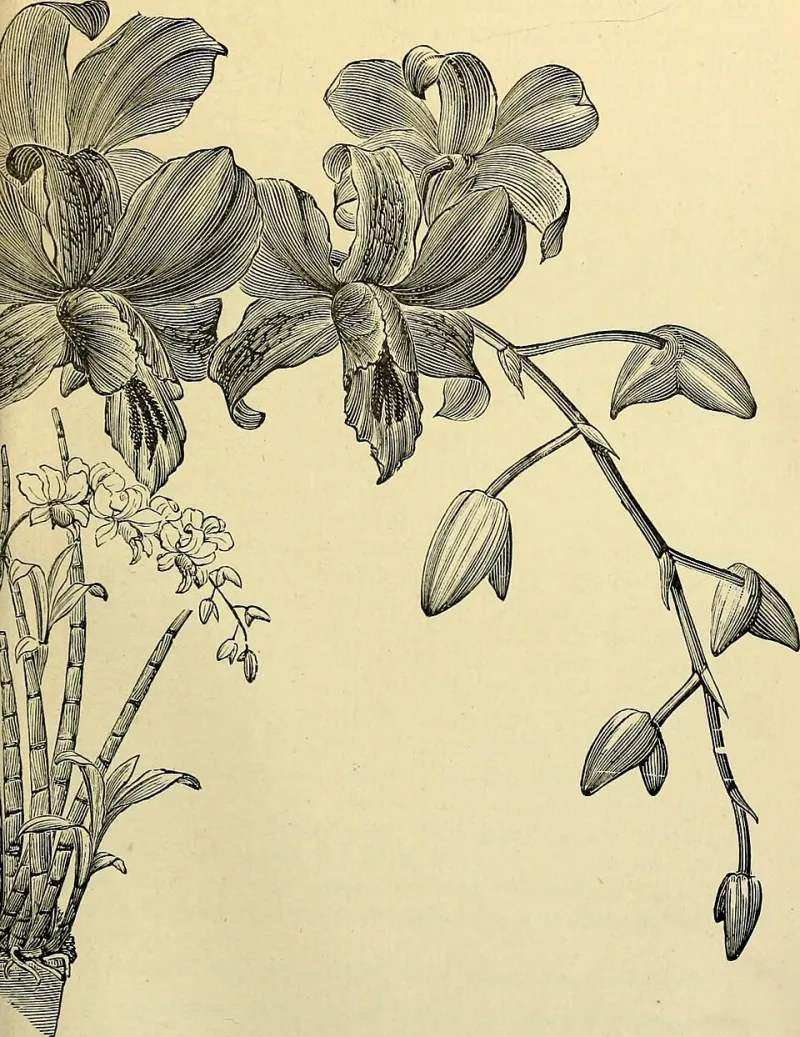
Dendrobium stems offer a lighter, more rhythmic line. Many varieties last two to three weeks in the vase, and their spacing of flowers makes them useful for low arrangements where air is part of the design. Choose stems with several open blooms and firm buds. They pair well with broad leaves and simple glass, and they do not need to be crowded to look generous.
Phalaenopsis
Phalaenopsis is familiar as a potted plant, but cut stems can be surprisingly effective when used with restraint. The individual flowers are long-lasting, and a short stem can be floated in a shallow bowl or set in a narrow vase. Expect one to two weeks from a cut stem, with the oldest flowers fading first. Remove them individually to keep the arrangement fresh.
Oncidium
Oncidium brings movement. The branching sprays of small flowers are less formal than Cymbidium and more delicate in scale, making them suited to a bedside table or a narrow hall console. Vase life is usually ten to fourteen days. Handle the sprays gently, as the fine stems can bruise, and strip any damaged flowers before arranging.
Paphiopedilum
Paphiopedilum, the slipper orchid, is not a long-stemmed cut flower in the conventional sense, but its blooms are exceptionally durable. A short stem set in a low vessel or a small glass is a quiet luxury for a guest room or bathroom shelf. Expect two to three weeks, perhaps longer in cool conditions. The unusual form is best allowed to speak for itself.
Conditioning: the quiet work
Fill a clean vase with tepid water and add flower food if you use it. Recut each stem at an angle, removing an inch or so, and strip any foliage that would sit below the waterline. Place the stems in the water immediately and leave them in a cool, shaded place for at least two hours before arranging. This rest period matters more than any elaborate trick.
Change the water every two days, recutting the stems lightly each time. Keep arrangements away from radiators, direct sun and bowls of fruit. Mist the flowers only if the room is very dry, and avoid wetting the blooms themselves. For Cymbidium and Dendrobium, a cool porch or unheated room overnight can noticeably extend performance.
A dining table arrangement in five moves
For a dining table, choose a low vessel so that guests can see across it. Begin with a few clean leaves, perhaps Aspidistra or a folded hosta leaf, to create a green base. Add one Cymbidium stem cut to the height of the vessel, allowing its arch to run along the table rather than upward. Place two shorter Dendrobium stems at opposing angles, then finish with a single Oncidium spray for lightness. Keep the palette to two colours: green with white, or green with a muted plum.
The result should look as though the orchids have been placed rather than forced. A few stems are enough. The temptation with cut orchids is to use too many, but their value lies in line and interval.
A console variation
On a console or hallway table, height is more useful than width. Use a narrow cylindrical vase and a single tall Cymbidium stem, trimmed so that the lowest flower sits just above the rim. Add a small dish of moss or a pair of low Phalaenopsis blooms in a separate glass. The composition can be asymmetrical, but it should feel balanced from the doorway.
Aftercare and expectations
Cut orchids are not immortality in flower form. Flowers will eventually fade, and the oldest blooms should be removed promptly. Keep the arrangement clean, the water fresh and the room cool. If a stem begins to brown at the cut, recut it; if the flowers collapse suddenly, the cause is usually warmth, ethylene or dirty water rather than the orchid itself.
Above all, cut with restraint. A healthy potted orchid is a long-term pleasure, and a cut stem should be a considered harvest rather than a stripping of the plant. Bought from a specialist grower, or taken sparingly from a mature clump, orchid stems bring a rare composure to the British home: formal without stiffness, and quietly extravagant without excess.