The Grams Between: A Kitchen-Scale Method for Reading Orchid Thirst
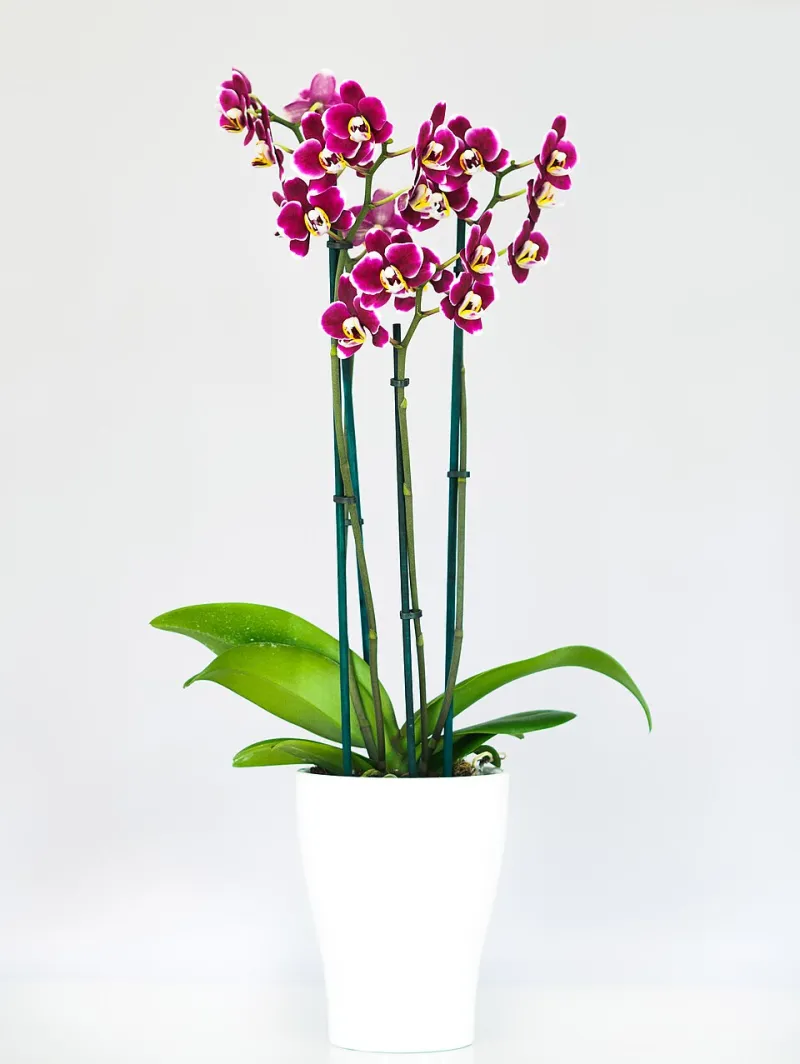
Photo: Timm Schoof, CC BY-SA 3.0, via Wikimedia Commons
As November 2026 settles into its familiar pattern of short days and early heating, the question of when to water an orchid becomes less a matter of routine and more a matter of evidence. The compost may look dry at the surface while remaining damp below; the outer pot may feel light while the inner root ball is still holding water. A kitchen scale will not answer every question, but it gives the grower something rarer than intuition: a record.
Why weight is a better question than moisture
A potted orchid is a small, self-contained system. Its mass is made up of compost, roots, leaves, the pot itself and, crucially, water. A moisture meter samples a single point and can be misled by loose bark, salt build-up or the position of the probe. A scale weighs the whole arrangement. It does not tell you where the water sits, but it tells you how much has been taken up, how much has drained away and how quickly the pot is drying.
This is particularly useful in a British home where conditions shift without warning. A mild, damp week in autumn may give way to a dry, overheated weekend once the radiators are running. Rather than watering by the calendar, the grower can watch the rate at which the pot loses weight and respond to the plant’s actual circumstances.
Establishing a dry baseline
The first step is to choose a baseline weight that means something. It should be taken when the orchid is ready for water — not bone dry, but approaching the point at which you would ordinarily reach for the watering can. Lift the inner pot from any decorative outer vessel, set it on a kitchen scale and record the figure in grams. Note the date, the pot size and the compost type, because a change of bark, sphagnum or top-dressing will alter the baseline.
For a newly acquired orchid, wait until it has completed one full drying cycle in your home before fixing the figure. A plant that has just arrived by post or from a garden centre may be carrying more water than its future routine will allow. The baseline is not a universal number; it is a personal reference for that pot, that compost and that room.
Use the same scale each time, placed on a level surface. A scale with one-gram resolution is adequate for small pots; a five-gram resolution is acceptable for larger specimens. Remove the outer vessel, wipe any condensation from the outside of the inner pot and avoid lifting the plant by its leaves or flower spike. The weight should reflect the pot and its contents, not the saucer, the cachepot or a trailing stem.
The watering pass
Once the baseline is recorded, the ritual becomes straightforward. Weigh the pot before watering. Water thoroughly, allowing the liquid to run through the compost, then leave the pot to drain for fifteen to twenty minutes. Weigh again. The difference between the two figures is the amount of water the pot has retained after drainage.
That figure is instructive in itself. A small pot may hold only fifty grams of water after a thorough watering; a larger pot may hold several hundred. Knowing the retained weight helps the grower understand how much water the compost can actually hold and how much is passing straight through. It also makes it easier to spot the day when the pot has returned to its dry baseline and is ready for another pass.
Record the before and after weights, the date and any notable change in conditions — a radiator turned on, a plant moved to a brighter sill, a spell of damp weather. Over several weeks, a pattern emerges. The pot may lose weight quickly in the first days after watering and then more slowly, or it may hold water longer than expected because the compost has begun to break down. Both are useful observations.
Reading the seasonal curve in a heated room
Central heating changes the game. Warm, dry air increases evaporation from the compost surface and from the leaves, while lower winter light reduces the plant’s growth and therefore its water use. The result is not a simple instruction to water more or less; it is a curve that must be read in context.
A pot that dries within five days in November may take eight days in January, even though the room feels warmer. The scale shows this without argument. If the weight falls sharply after the heating comes on, check whether the orchid is sitting in a draught from a window or too close to a radiator. If it barely moves, consider whether the compost has become compacted or the roots have lost vigour. The number is a prompt for observation, not a verdict.
The limits of a number
A scale cannot see root colour, leaf firmness or the first sour smell of decaying compost. It cannot tell you whether the plant is thirsty because it is actively growing or because its roots have failed. Weighing is therefore a companion to, not a replacement for, the weekly inspection of roots and leaves.
Nor should the grower become enslaved to a single figure. The dry baseline is a reference point, not a trigger for mechanical watering. If the pot approaches its baseline while the plant is in active growth and the roots are silver-green, water may be appropriate. If the weight is low but the compost still feels cool and dense, investigate before pouring.
A calm and repeatable ritual
The kitchen scale appeals because it turns a vague anxiety into a small, orderly task. Weigh, water, weigh, note, wait. In the low light of a British winter, when the difference between damp and dry is easy to misjudge, that ritual offers consistency. It does not make the grower infallible, but it makes the mistakes visible sooner. For the orchid on the windowsill, that is often enough.