When the Pane Turns: Safeguarding Orchids Through a British Frost Night
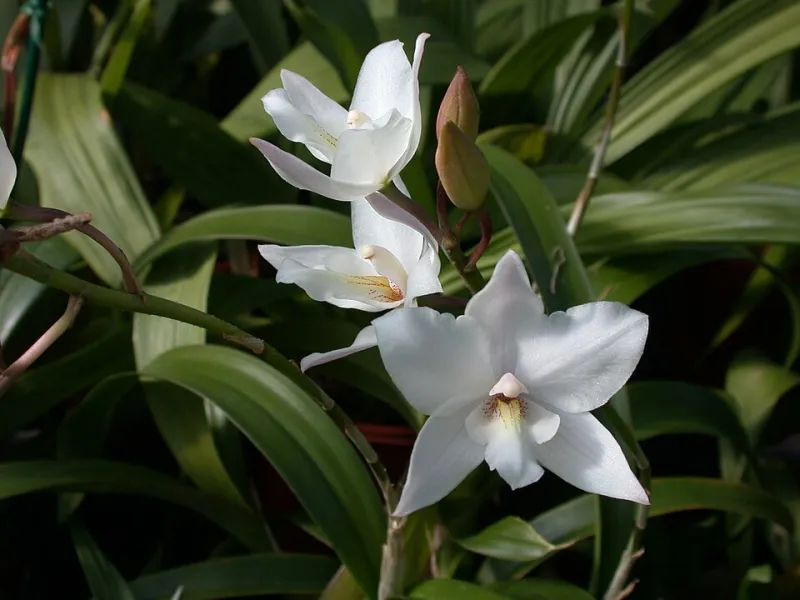
Photo: Arne and Bent Larsen, Haarby, Denmark, CC BY-SA 2.5 dk, via Wikimedia Commons
A British frost night rarely announces itself indoors. The heating remains on, the room feels steady, and yet the glass beside an orchid may be running several degrees cooler than the air a foot away. On still, clear evenings, heat leaves the pane quickly, and the windowsill becomes a narrow microclimate of its own. For orchids in bud, in flower, or simply resting after a long season, that distinction matters.
The aim is not to wrap a windowsill into a sealed box, nor to banish plants from the brightest place in the house at the first cold forecast. It is to notice the cold edge before it becomes a problem, and to make small, considered adjustments that keep the display intact. A frost-night routine should feel like good housekeeping, not an emergency.
Reading the Sill Before Sunset
Begin in the late afternoon, while there is still enough light to see clearly. A minimum–maximum thermometer placed on the sill gives a more honest reading than a wall thermostat across the room, but the hand is a useful first instrument. Rest the back of the fingers against the glass for a few seconds. If the pane feels sharply cold, treat the sill as exposed, whatever the room thermometer says.
Check the forecast for clear skies rather than only for snow. Radiative cooling is often most pronounced under cloudless conditions, when the glass loses heat upwards and the sill follows. An outside temperature of two or three degrees Celsius can still create a punishing pocket of air behind a curtain. Pay attention, too, to the difference between the centre of the window and the corners, where cold air gathers and condensation first appears.
This is also the moment to judge the room itself. A windowsill above a radiator may be warm at compost level and cold at leaf level; a sash window in an older house may admit a thin draught that a modern casement does not. Orchids do not need a perfectly uniform climate, but they do benefit from a grower who knows which part of the sill is kindest.
Cold Glass and Moving Air Are Different Problems
A chilly pane and a draught are often confused because both make a windowsill feel unwelcoming. The remedies differ. Cold glass calls for a modest move inland or a layer of protection at the window. A draught calls for attention to the gap itself, whether around a sash, a vent or the meeting rail of a casement.
Avoid the temptation to seal every opening permanently. Orchids need air movement, and a room sealed against winter often becomes stagnant. Instead, keep plants out of the direct path of moving cold air. If a curtain billows against a flower spike on a windy night, the display is better shifted a few inches towards the room than wrapped in fabric. Curtains can also trap cold air between cloth and glass, so draw them with care: let them hang clear of leaves and stems rather than pressing the planting into the window recess.
A Three-Point Evening Check
A workable routine has three quiet stages. At dusk, move the most tender plants inland by ten to fifteen centimetres, no more than the depth of a hand. This is enough to take them out of the coldest band of air without changing their light or orientation. If a plant is in bud, do not rotate it to face the room unless it has already been turning; a sudden change of angle can encourage uneven development or a leaning spike.
Before bed, look at the inner glass. A light film of condensation is common on cold nights, especially in kitchens and bathrooms, but water running down the pane is a signal to act. Briefly ventilate the room if the outdoor air is not bitter, or lower the humidity by moving saucers and recently watered plants away from the glass. Do not mist orchids at night in cold weather. A dry crown and a dry leaf axil are far safer than a well-meant evening spray that sits until morning.
At first light, inspect the sill before the room warms too quickly. Look at buds for a pinched or darkened tip, at thin roots near the surface for a glassy look, and at leaves for patches that remain cold to the touch. A plant that has been chilled often recovers quietly if it is allowed to warm gradually; a plant that is moved straight to a hot radiator may not.
Deciding What to Move
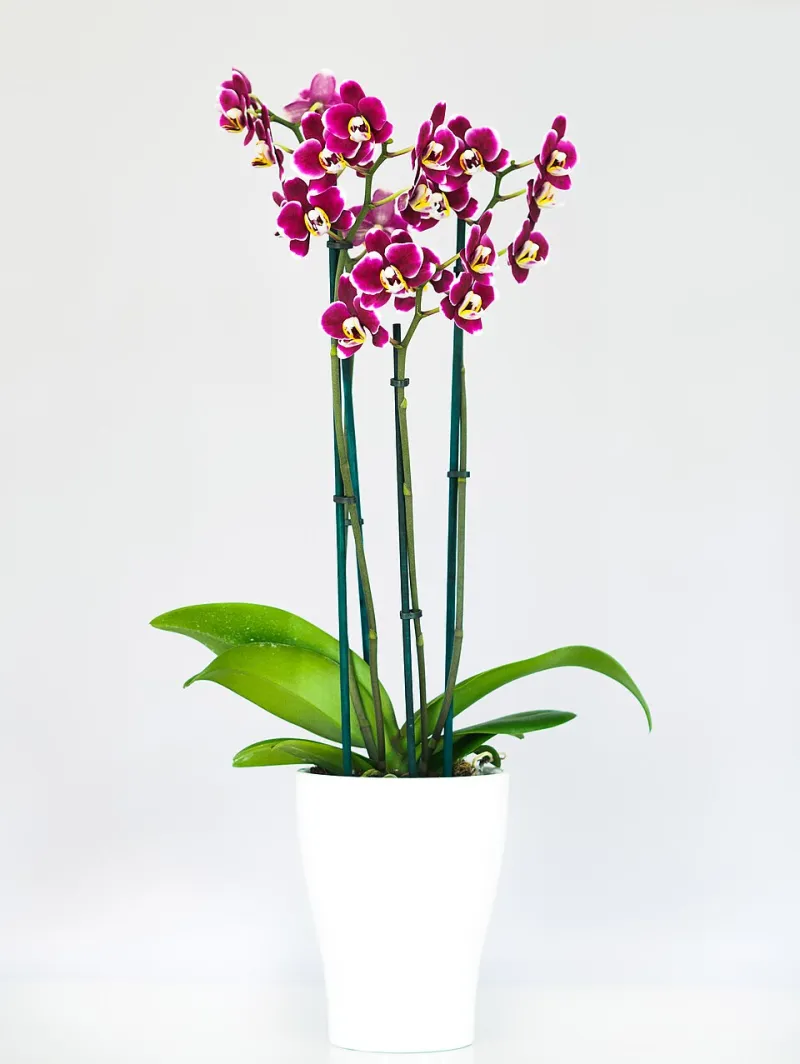
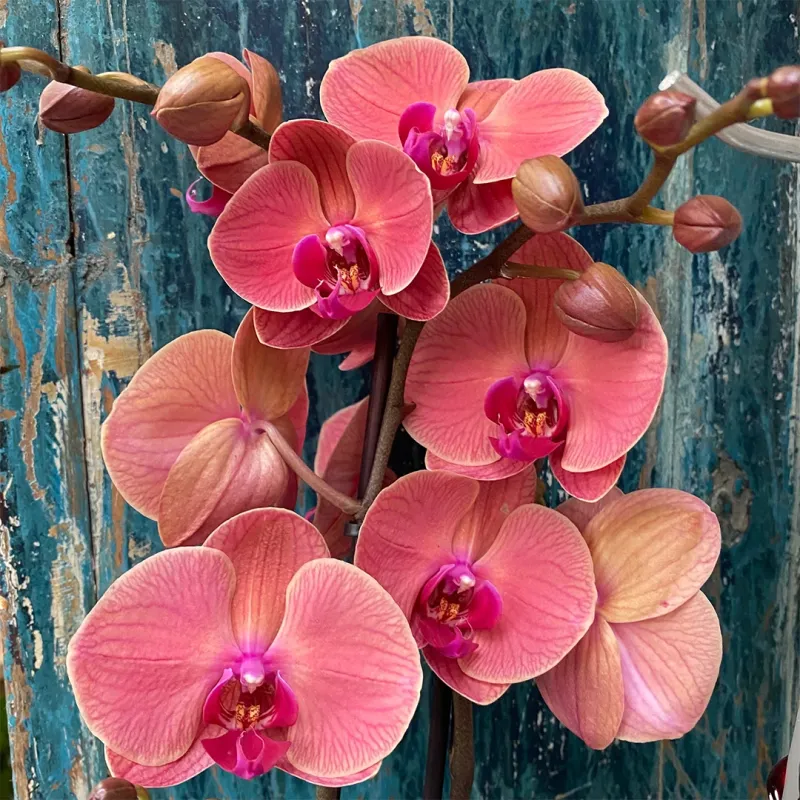
Not every orchid needs the same treatment. Phalaenopsis in bud, soft-leaved Paphiopedilum, and young plants recently potted are the most sensible candidates for a move inland. Cool-growing cymbidiums and many odontoglossums may tolerate a cooler sill, provided the glass is not touching leaves and the compost is not wet. The deciding factor is not the label alone but the condition of the plant: a budded spike, a new root tip and a damp saucer all raise the stakes.
Move the display as a considered group where possible. A tray or shallow basket can be shifted without handling each pot, and a coaster beneath a saucer prevents a cold ring from marking the sill. Keep the group open enough for air to pass between leaves. Crowding plants together for warmth can trap moisture and obscure the first signs of trouble.
The Morning After, and the Days Beyond
Once the frost has passed, resist the urge to return everything at once. A gradual move back over two or three days is gentler than a sudden change, particularly for plants that have spent the night in bud. Check the compost before watering. Cold compost holds water longer than warm compost, and a chilled root system is more vulnerable to rot than to thirst. Water in the morning, when the room is warming, and keep the water off the leaves.
The frost-night routine is ultimately a discipline of attention. It asks the grower to know where the cold gathers, to move a pot by inches rather than metres, and to leave well alone when the plant is merely cool rather than compromised. On the coldest nights of a British winter, that quiet care is often enough to carry an orchid through until the light returns.